
Drowning in ‘AI slop’ and starving for meaning

We recently came across two articles about the latest ‘hot job’ and most in-demand skill in 2026. It is possibly the oldest job in history: storyteller.
The Times reported Businesses are hiring storytellers to ‘cut through the AI slop, referencing an earlier article in The Wall Street Journal about Companies ‘desperately seeking’ storytellers.
If you're online, you’re no stranger to AI-generated content. There's a lot of noise out there. And much of it is indeed slop.
Our screens are flooded with low-quality, generic content.
Content is abundant, meaning is not.
According to the WSJ, businesses are rethinking storytelling and the role it plays.
Storytelling isn’t creative flair or fluff, it’s a strategic driver — of clarity, trust and engagement.
As a communicator and writer, these headlines were music to my ears (and eyeballs). But what really struck us is how familiar these problems felt.
PROBLEM: Low-quality, generic content.
PROBLEM: Abundant content, without abundant meaning.
SOLUTION: Quality content and stories which create connection, trust and engagement with a brand.
Recruitment has had this problem for many years.
> Job ads full of generic content (long before generative AI was writing it).
> Cookie-cutter ads which read like shopping lists, stuffed full of key words.
In recruitment marketing, sloppy content has been around much longer than ChatGPT.
AI didn’t cause this problem — it amplified it.
Poor quality content in recruitment has been an issue for a long time. It impacts hiring outcomes in lots of ways — who you can attract, candidate suitability, how engaged they are, how long your hiring process takes, employee engagement, early turnover, performance and team culture.
In recruitment, we don’t lose meaning and connection because of AI — we lose it when we don’t think of the humans on the other side of the hiring process.
In many businesses, recruitment is treated as a transaction. It’s process-driven. This approach misses the point entirely.
Recruitment is the start of a working relationship — it’s relational, not transactional.
How you hire is part of your brand. And it starts with the story you tell through your recruitment marketing campaign and every communication touchpoint
A circular problem
Businesses need storytellers to help them connect with audiences — to attract, engage and retain customers and clients.
Businesses also need the right people to serve those customers and clients. This means employees and candidates are an audience.
To attract great storytellers (and all of the other people you need in your team), you first need to be an effective storyteller. It’s a circular problem.
If your recruitment storytelling is unclear, generic, inauthentic or simply not compelling, people will self-select out.
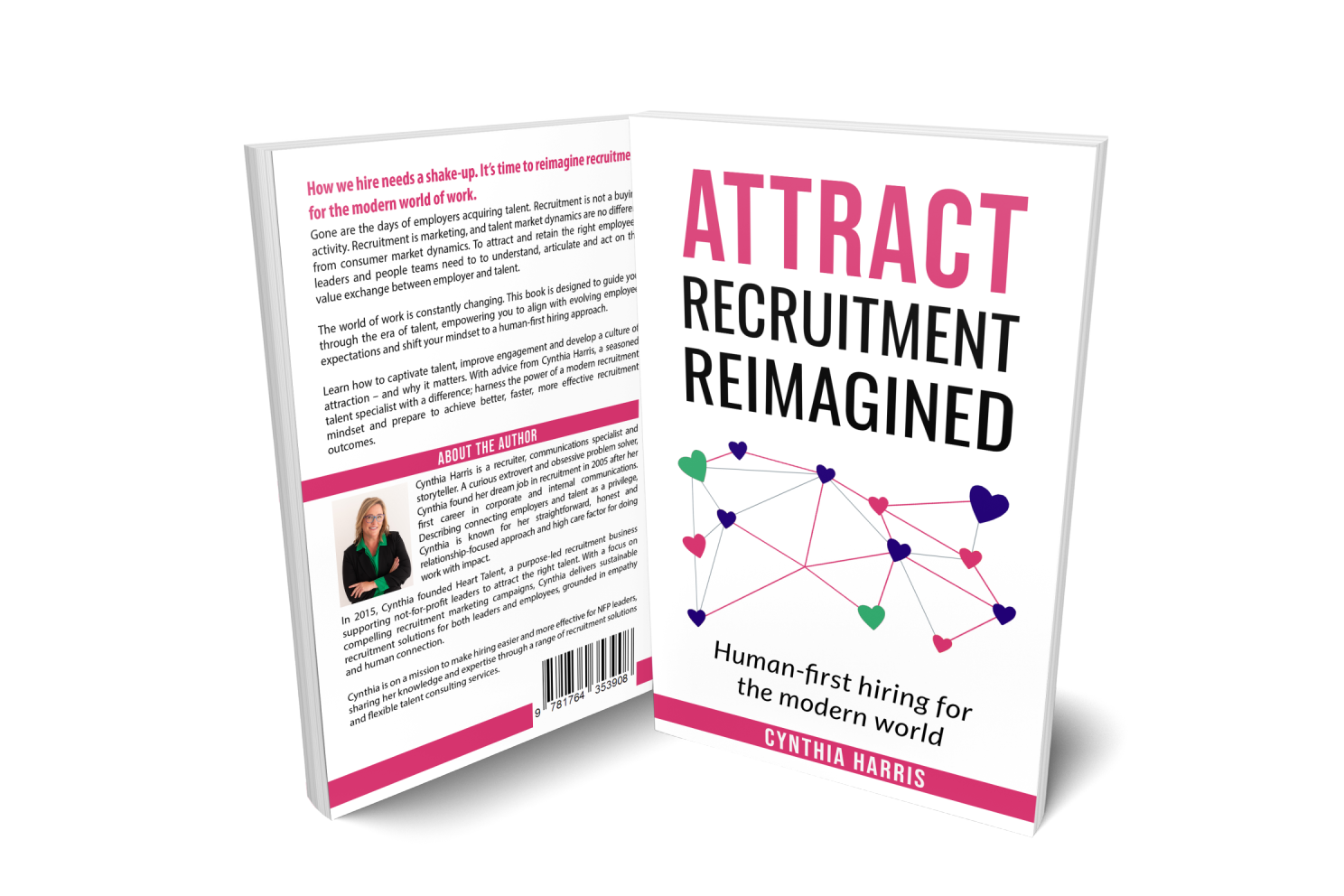
Recruitment is a brand moment. How and what you communicate when you’re recruiting is critical. Whoever is responsible for recruitment needs to think and act like a marketer. I write about this in the book Attract: Recruitment Reimagined.
Recruitment is marketing.
> Candidates (and employees) are consumers.
> The product is the job you want them to choose (and keep).
> Recruitment is about winning hearts and minds (not bums on seats).
What won’t cut it when you’re hiring
Businesses need storytellers to cut through the AI noise — to attract customers and employees. While there is more to an effective recruitment campaign than the job ad, here are some common mistakes hiring teams make:
generic, AI-generated ad copy
shopping-list style ads with no narrative
absence of transparency (vague scope, unclear impact, no salary information)
ad copy which is all about the employer/company (hint: it’s not about you).
Storytelling is critical in marketing — and recruitment.
Storytelling isn’t cosmetic or marketing fluff. It helps candidates (the humans in hiring) understand why the role exists, if it might be a match for them and how taking this job might make their life better or different in some way.
Looking for a new job is an expression of optimism. It’s someone saying “I want something more, better or different”.
People aren’t looking for a new job, they’re looking for a future.
As world marketing leader Seth Godin teaches us:
People do not buy goods and services. They buy relations, stories, and magic.
One of the reasons we love our job is that hiring is one of the most human things organisations do. Before someone applies, interviews or accepts an offer, they’re making sense of a story — about the work, the people, and the future they’re stepping into.
Perhaps we can't stop the AI slop. But we can reimagine how we approach recruitment and make it more human, which starts with content that connects.
We are deeply committed to making recruitment easier for nonprofit leaders. If you’re curious to know more, get in touch for a chat.